
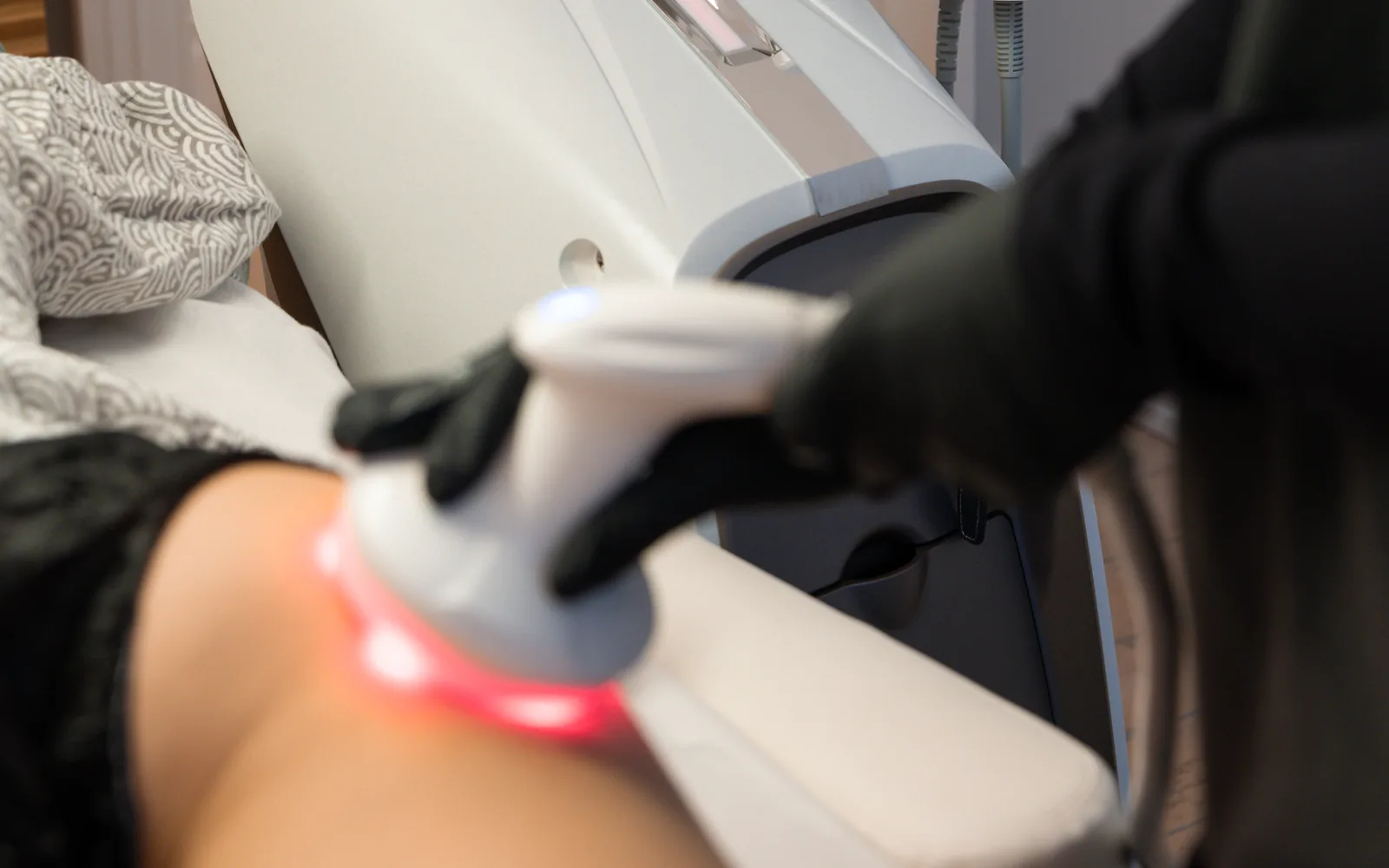
Cellulite is often treated as a fat problem. In reality, fat is only one part of the equation. The visibility of cellulite depends just as much on skin strength and structure as it does on fat itself.
Understanding This Changes How Cellulite Should Be Treated
Cellulite forms when fat cells beneath the skin push upwards, while connective tissue pulls the skin downwards. When the skin above is strong and elastic, it can hold everything smoothly in place. When the skin becomes thinner or weaker, the uneven texture underneath becomes more visible.
Why Cellulite Appears — The Key Factors
Cellulite is influenced by several overlapping factors, including subcutaneous fat which can push against the skin from below, connective tissue structure which can tether the skin downwards, skin quality including collagen and elastin levels, and circulation and lymphatic flow which affect fluid retention and tissue health. It's the combination of these factors — not just fat alone — that creates visible dimpling.
The Role of Skin Strength (Often Overlooked)
Skin acts as a supportive layer. When it is dense, firm, and elastic, it masks underlying irregularities. When it weakens, cellulite becomes easier to see. In New Zealand, particularly in the North Island, long-term sun exposure contributes to collagen and elastin breakdown, reduced skin thickness, and loss of firmness over time. This is why cellulite can become more noticeable even without weight gain or lifestyle changes.
Why Diet and Exercise Often Aren't Enough
While diet and exercise are essential for health, they don't rebuild collagen, don't strengthen connective tissue, and don't improve skin density. In some cases, fat loss without improved skin support can actually increase the visibility of cellulite. Effective cellulite treatment needs to address skin, tissue, and circulation — not just fat reduction.
A More Holistic Approach to Cellulite
Our approach to cellulite treatment focuses on supporting the body at multiple levels rather than targeting a single cause. This includes strengthening and firming the skin through collagen stimulation, supporting fat metabolism in a controlled non-invasive way, improving circulation and lymphatic drainage, and softening fibrous tissue that contributes to dimpling. By working across multiple layers of the skin and subcutaneous tissue, results develop gradually and naturally.
Comfortable, Non-Invasive and Progressive
Cellulite treatment does not need to be aggressive to be effective. This approach is non-invasive and well tolerated, comfortable with no downtime, and progressive with improvements seen over time. It suits those who want visible change without extreme interventions.
Who This Approach Is Best For
This type of cellulite treatment is well-suited for people who notice cellulite despite a healthy lifestyle, are concerned about skin firmness and texture, prefer a non-surgical comfortable option, and value skin health as much as visible results. It is not a weight-loss treatment, but a skin and tissue remodelling approach.
Final Thought
Cellulite is complex and common — and treating it effectively requires more than focusing on fat alone. When treatment strengthens the skin, improves circulation, and supports underlying tissue, results are smoother, more balanced, and longer lasting. For those based in New Zealand and seeking a thoughtful, non-invasive approach to cellulite, a personalised consultation is the best place to start.
Book a Consultation
Our practitioners will assess your skin and goals to create a personalised treatment plan.